
Low back, buttock, and leg pain isn’t always caused by discs or nerves. Often, the source lies in myofascial trigger points—tight, irritable knots within muscle tissue that refer pain elsewhere. This issue walks through several key muscles that commonly mimic sciatica and chronic low back pain, and what you can do about them.
Muscle 1: Gluteus Medius
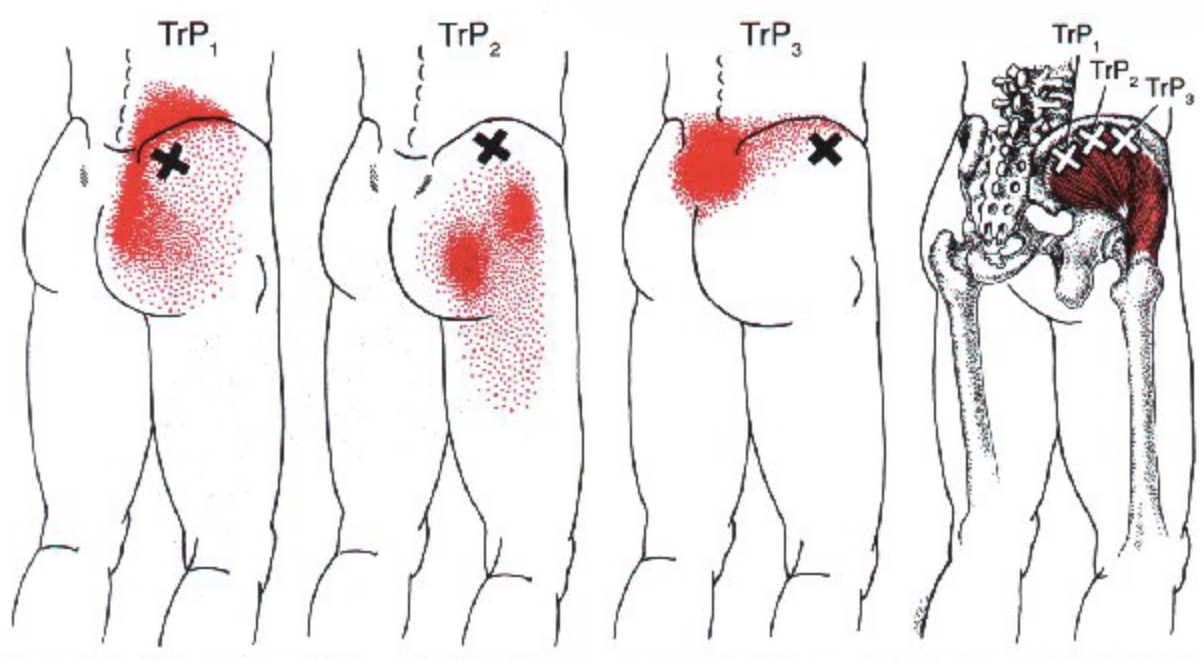
Referred Pain Pattern:
Pain typically spreads across the outer hip, into the buttock, and can travel down the side of the thigh—sometimes reaching the knee. It’s frequently mistaken for hip joint or lumbar nerve pain.
How to Identify Trigger Points:
- Tender spots on the outer pelvis (just below the iliac crest)
- Pain when lying on the affected side
- Weakness or instability when standing on one leg
Treatment Approaches:
- Foam rolling (check out the foam rolling exercise library)
- Muscle activation
- Manual therapy such as trigger point massage
Muscle 2: Gluteus Minimus
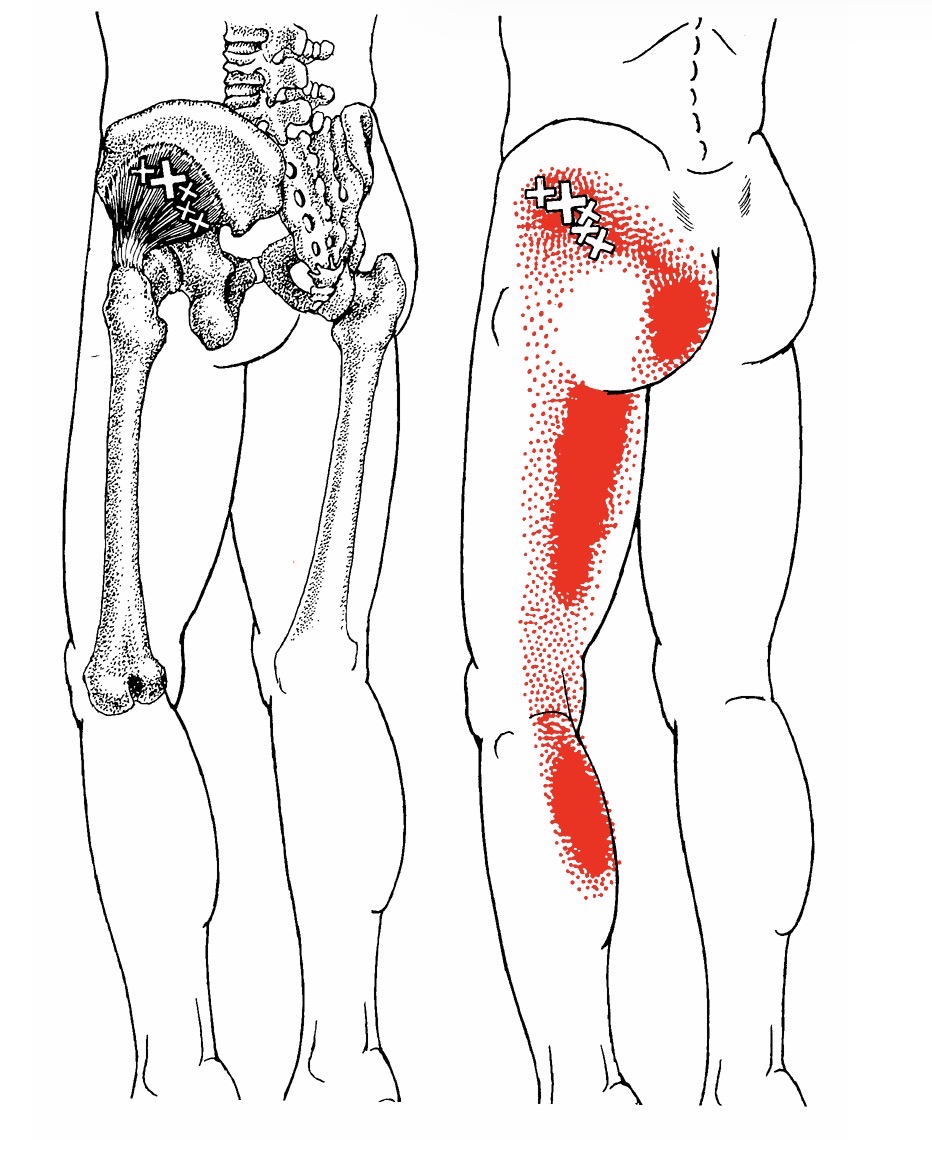
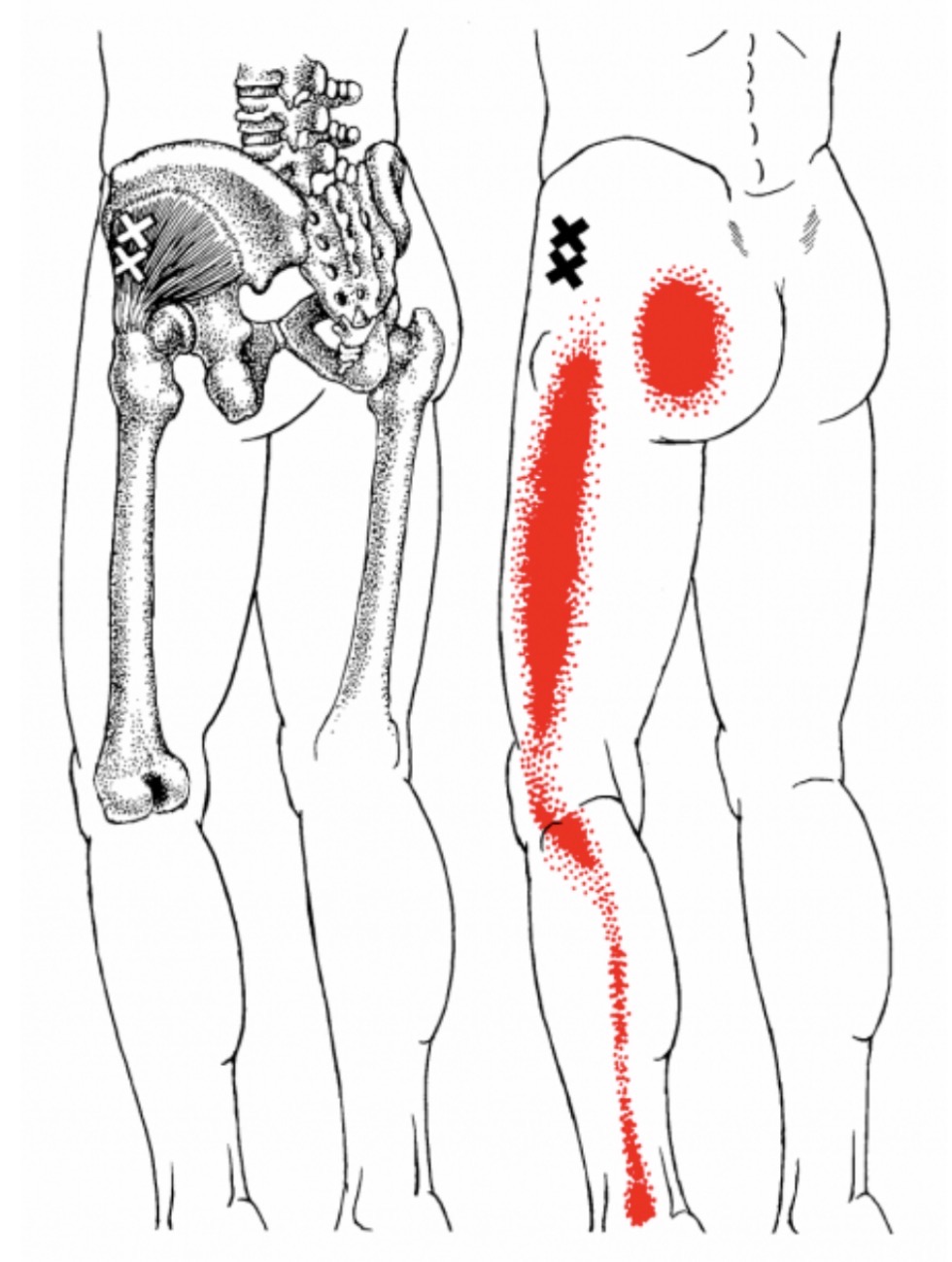
Referred Pain Pattern:
Localised low back pain that may spread to the sacroiliac region and upper buttock. Rarely travels far down the leg but can feel deep and persistent.
How to Identify Trigger Points:
- Deep tenderness beneath the glute medius
- Stretching hip rotators and abductors
- Movement retraining to reduce overload
Treatment Approches
- Foam rolling (check out the foam rolling exercise library)
- Muscle activation
- Manual therapy such as trigger point massage
Muscle 3: Quadratus Lumborum
Referred Pain Pattern:
Localised low back pain that may spread to the sacroiliac region and upper buttock. Rarely travels far down the leg but can feel deep and persistent.
How to Identify Trigger Points:
- Pain just above the pelvis, beside the spine
- Increased discomfort when standing, walking, or side bending
- Difficulty standing fully upright
Treatment Approaches:
- Foam rolling (check out the foam rolling exercise library)
- Muscle activation
- Manual therapy such as trigger point massage
Muscle 4: Longissimus Thoracis
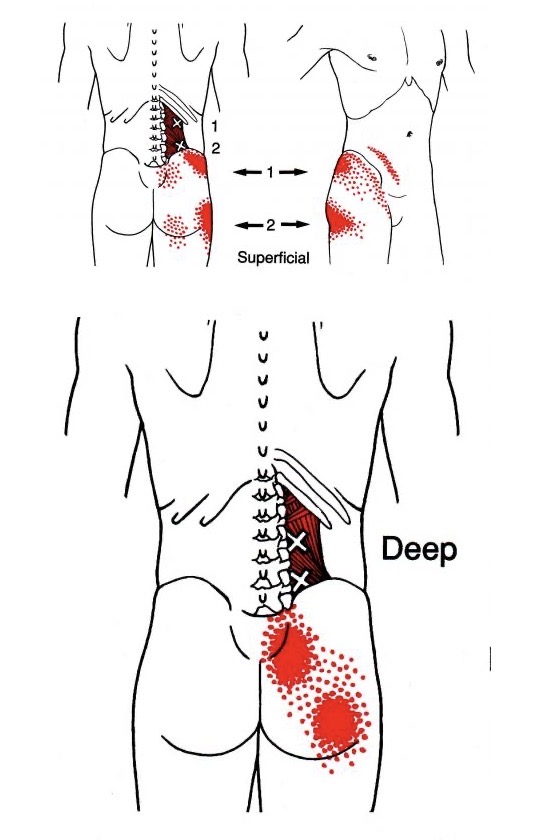
Referred Pain Pattern:
A deep, aching pain running parallel to the spine, often spanning the mid- to low-back region. Can contribute to stiffness and reduced mobility.
How to Identify Trigger Points:
- Tenderness along the spinal muscles
- Pain aggravated by prolonged sitting or extension
- Reduced spinal flexibility
Treatment Approches
- Foam rolling (check out the foam rolling exercise library)
- Muscle activation
- Manual therapy such as trigger point massage
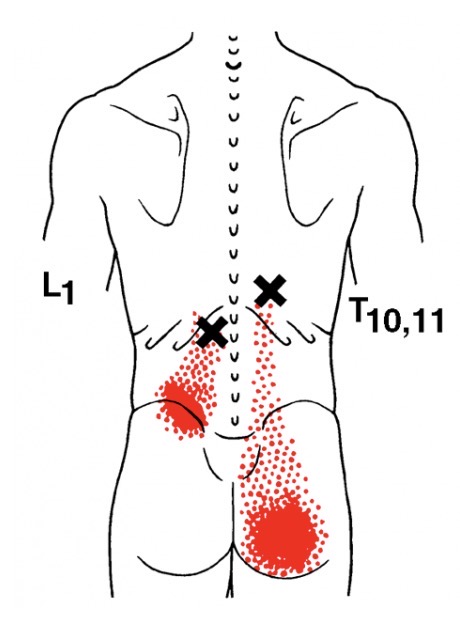
Muscle 5: Iliocostalis Lumborum
Referred Pain Pattern:
Pain spreads across the lower back and may extend into the upper buttock or lateral hip.
How to Identify Trigger Points:
- Tenderness slightly lateral to the spine
- Pain when bending backward or twisting
- Tightness after prolonged standing
Treatment Approches
- Foam rolling (check out the foam rolling exercise library)
- Muscle activation
- Manual therapy such as trigger point massage
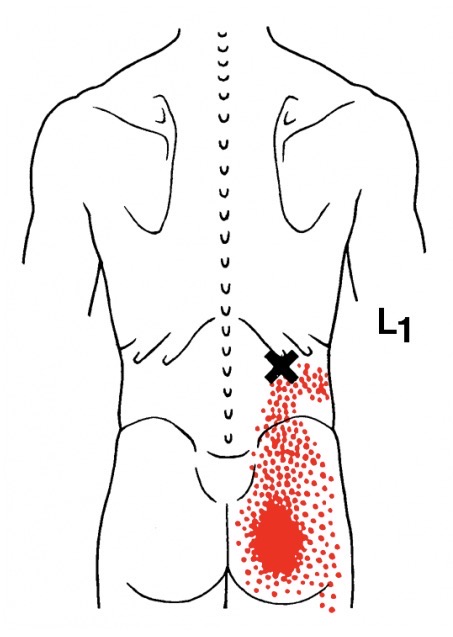
Muscle 6: Iliocostalis Lumborum
Referred Pain Pattern:
Deep, localized pain near the spine that may feel like a persistent ache or instability rather than sharp pain.
How to Identify Trigger Points:
- Pain close to the spine, often one-sided
- Worse with prolonged standing or small movements
- Difficulty maintaining posture
Treatment Approches
- Foam rolling (check out the foam rolling exercise library)
- Muscle activation
- Manual therapy such as trigger point massage
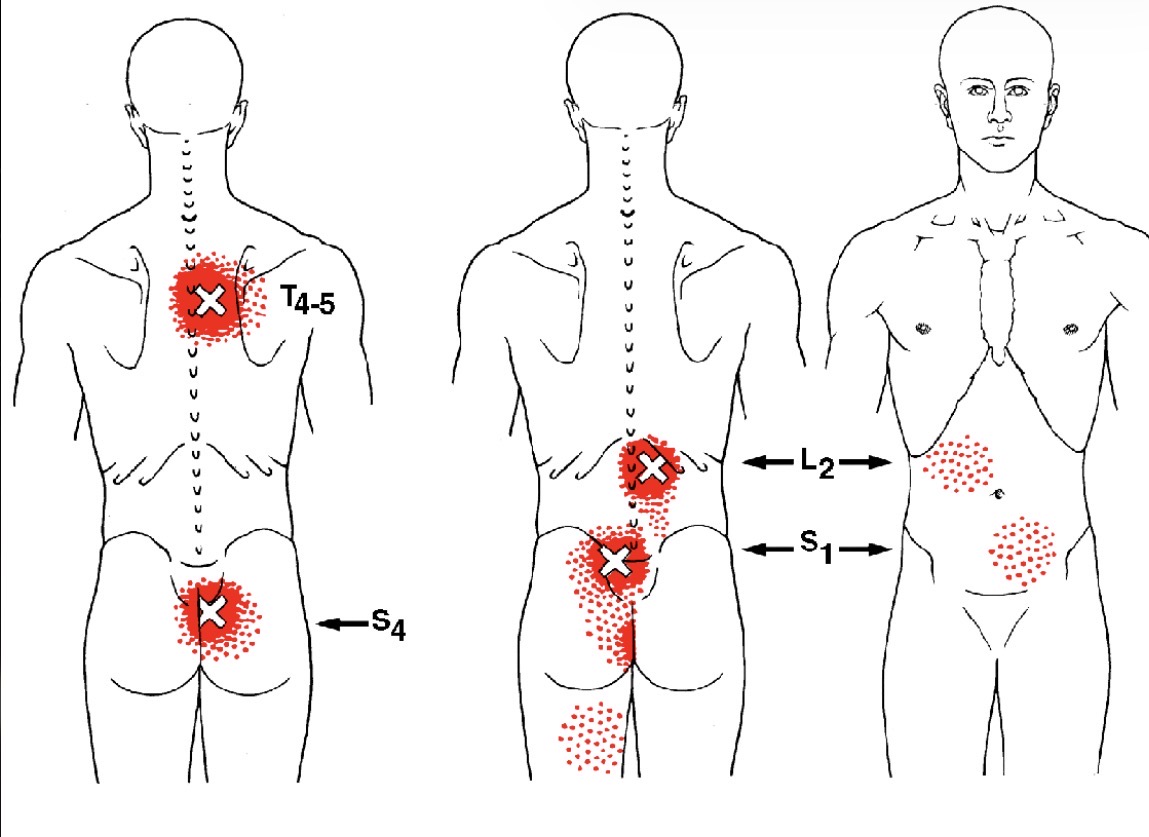
Muscle 7: Psoas
Referred Pain Pattern:
Pain in the low back, front of the hip, and sometimes the thigh. Can contribute to both back and groin discomfort.
How to Identify Trigger Points:
- Deep abdominal or hip tenderness
- Pain when standing from sitting
- Tightness with hip extension
Treatment Approches
- Foam rolling (check out the foam rolling exercise library)
- Muscle activation
- Manual therapy such as trigger point massage
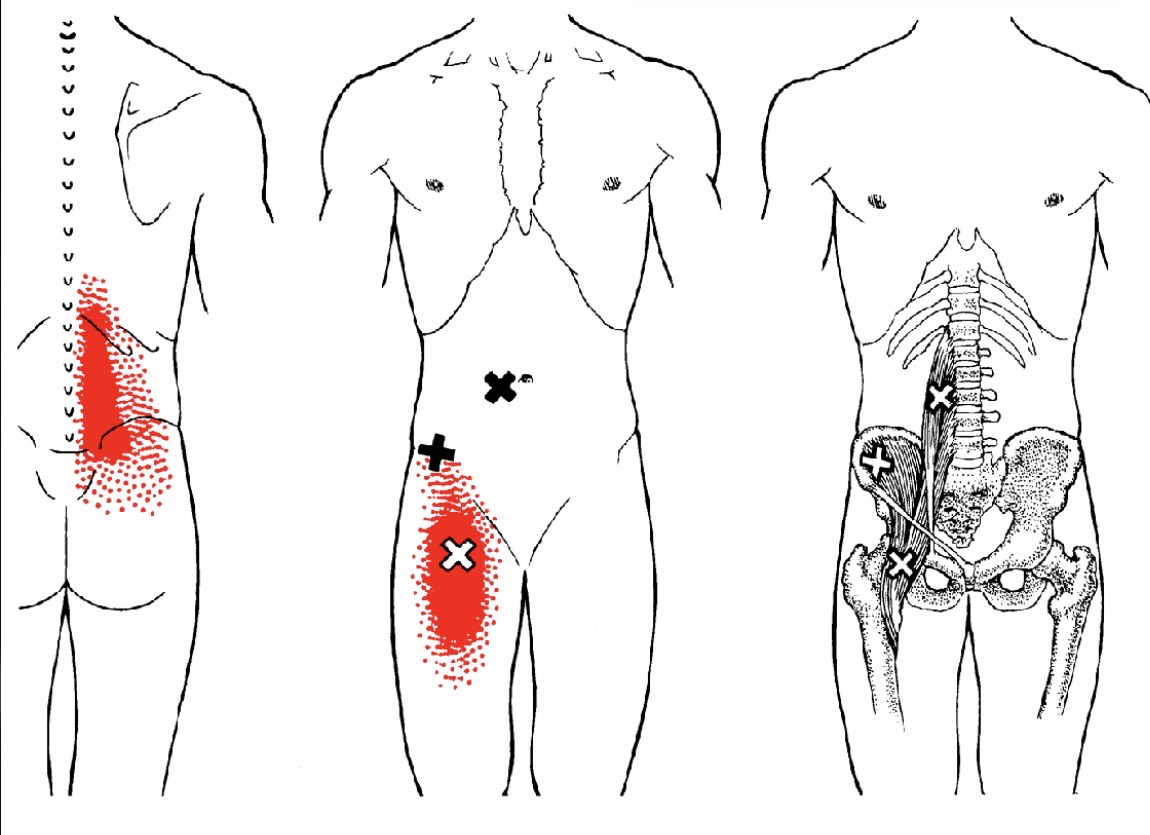
Now you are equipped with the knowledge you are able to find out whether trigger points are playing a part in your pain. Use the assessments within the online portal to discover if they are.
Responses